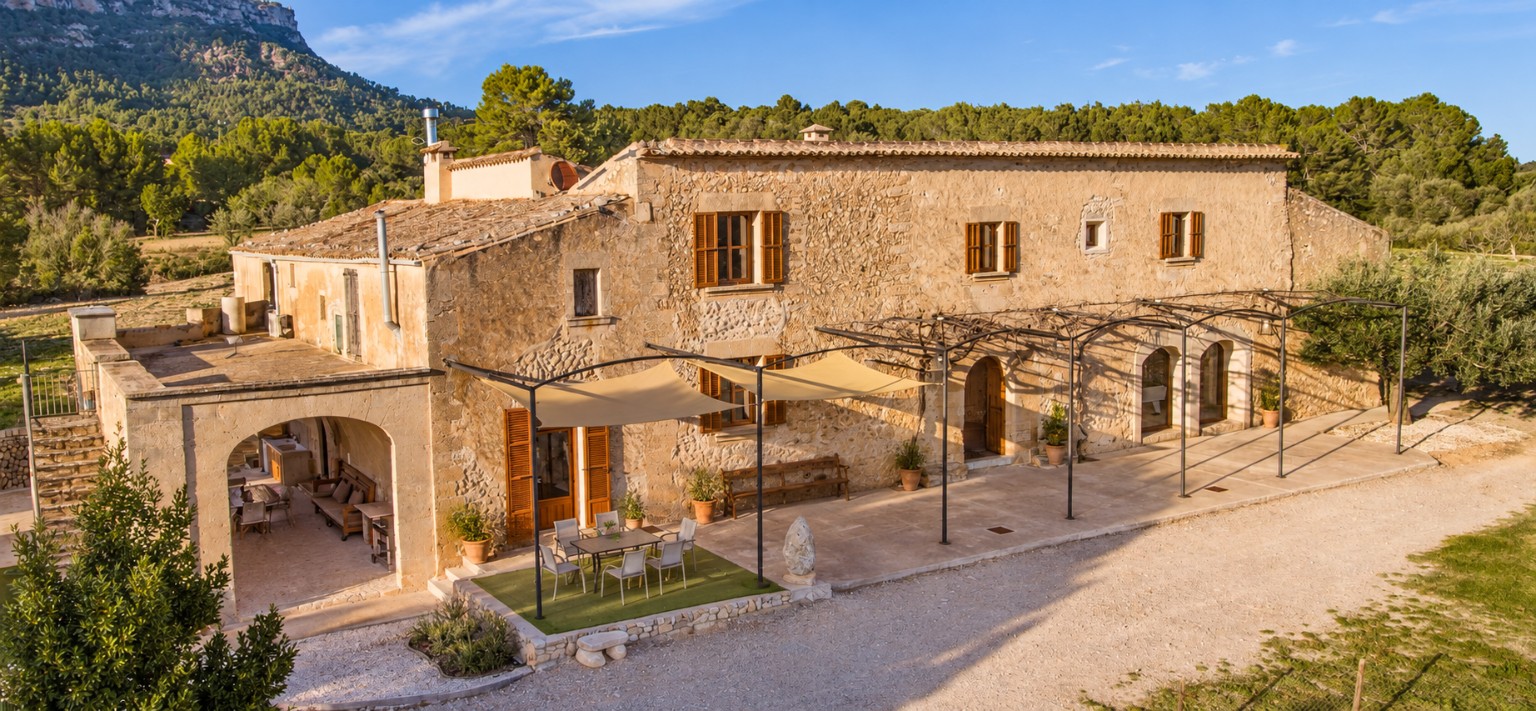
History of Son Pons Ferratge
Eight centuries within a landscape.
The history of Son Pons is not found only in documents. It also lives in the house, in the dry-stone walls, along the paths, in the water and in the trees that have watched generations pass.
Four episodes
A history to explore at different depths.
Each episode can be read as a brief entry or opened to discover the full account, its images and the questions that remain open.
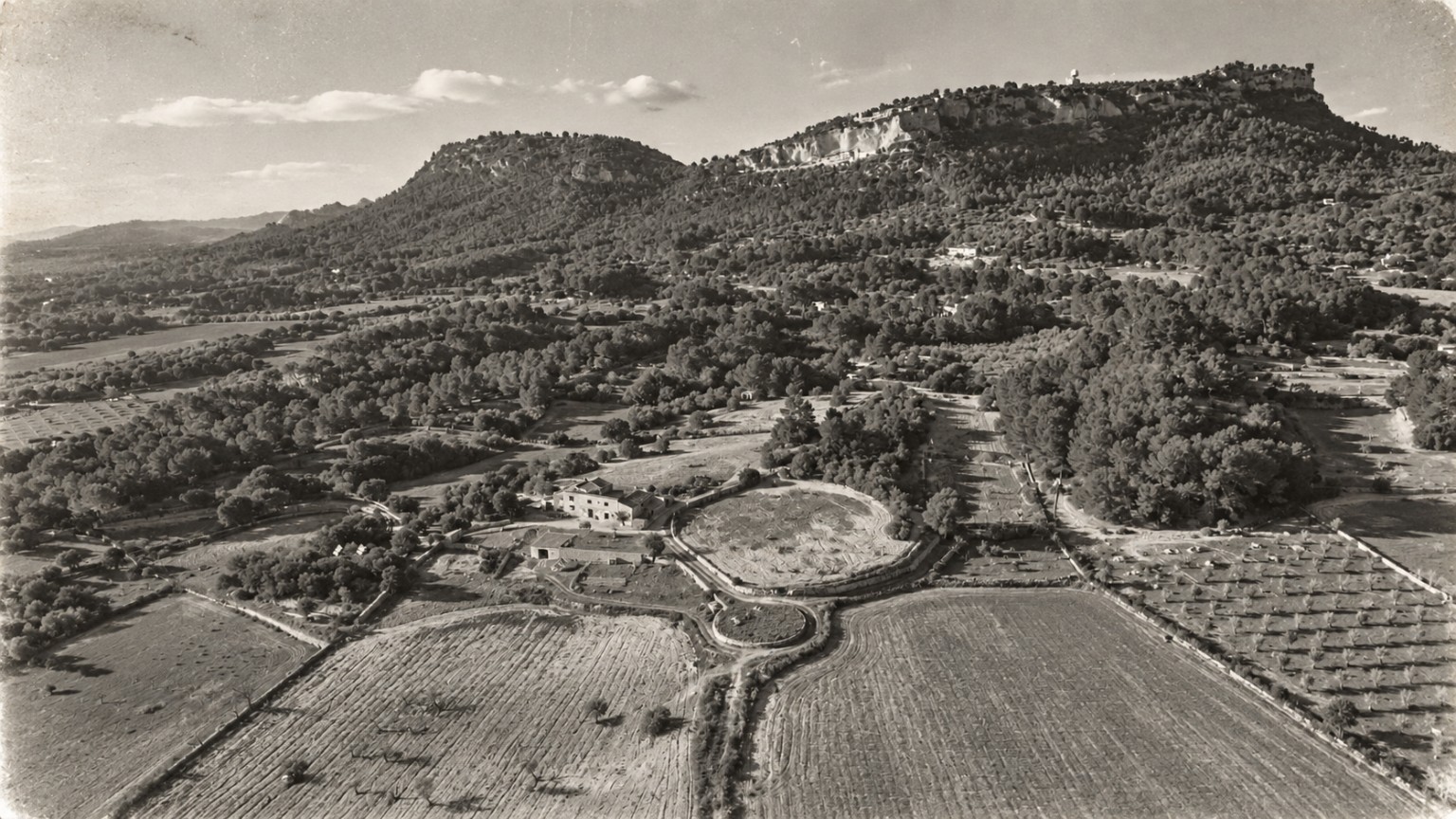 Episode IThe origins of Son Pons — Binilagant.From the medieval landscape to the birth of Son Ponç Farratge.Read the chapterClose the chapter
Jaume I · Binilagant · Origins
Before Son Pons: Binilagant.
In 1229, King Jaume I, the Conqueror, landed in Mallorca at the head of an expedition that would change the island’s history forever. The conquest brought a new organisation of the territory. The old Islamic-era farmsteads, their cultivated lands and their systems for making use of water were gradually incorporated into the new feudal order.
It is in this landscape of medieval Mallorca that we find the beginnings of our story: Binilagant, the lands that would lead us to Son Pons Ferratge.
Before they were known as Son Pons Ferratge, these lands formed part of a landscape of farmsteads. One of them was Binilagant, a name that preserves the memory of Mallorca before the Christian conquest.
The name Binilagant appears in medieval documentation. Over the centuries, its lands changed hands and were divided: the map of an old farmstead eventually became the map of several estates.
The names that surface in the documents.
Between 1462 and 1464, a sale of Binilagant mentions Gabriel Salvà and several buyers. Among them was Bartomeu Ponç, a blacksmith. It is a suggestive appearance of the surname, although we still do not know whether he was related to the Gabriel Ponç who would give Son Pons its name.
We then find Llorenç Tomàs in 1520 and Miquel Tomàs in 1532. By the middle of the sixteenth century, Binilagant had passed to the Sureda Sanglada family. This was the moment when the decisive change in our story took place.
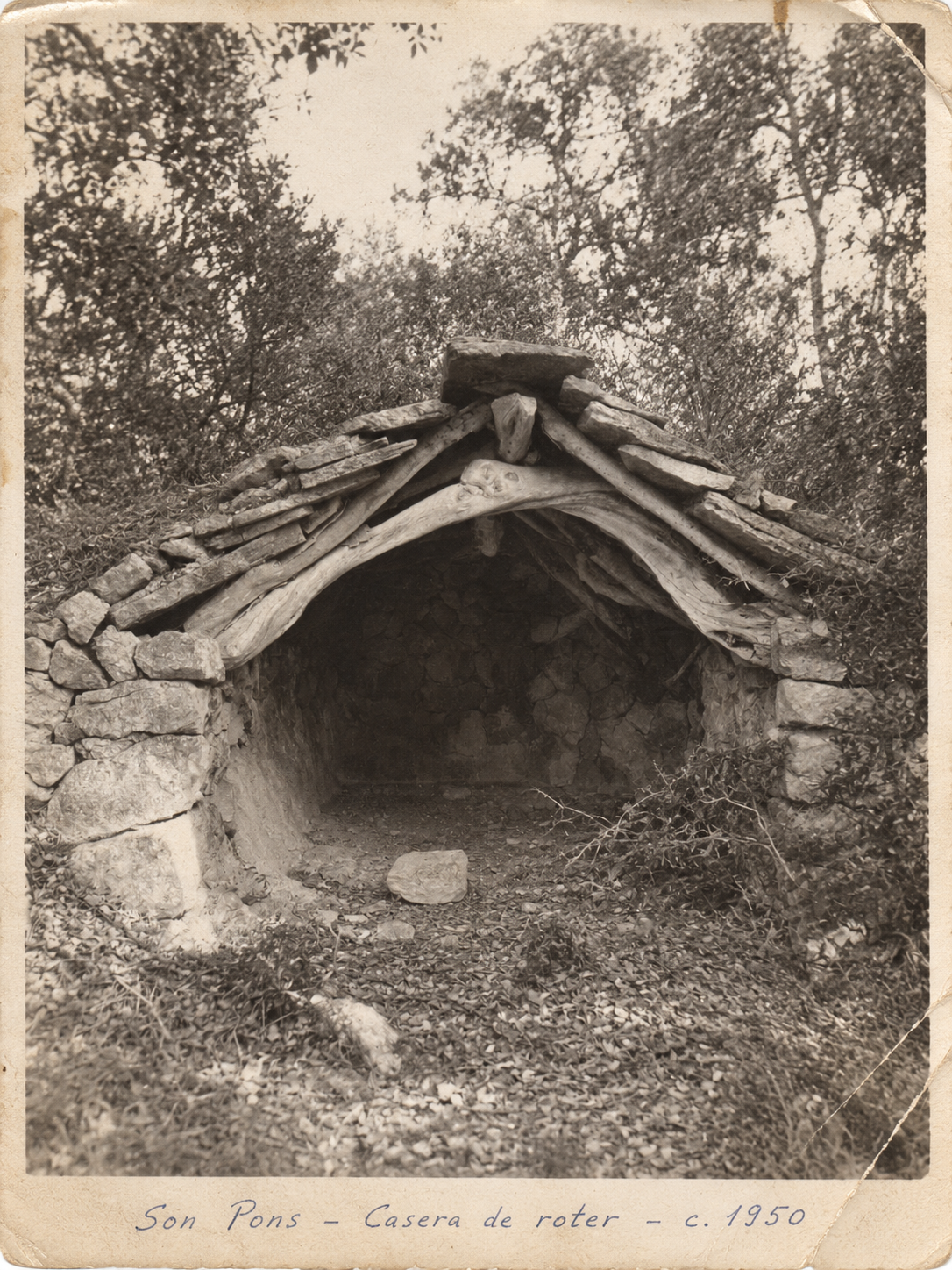
Son Ponç Farratge is born.
Miquel Sureda separated and sold a considerable part of Binilagant to Gabriel Ponç, known as Farratge. From that transaction onwards, the new estate began to have a name of its own: Son Ponç Farratge.
A buyer’s surname became joined to the land. From here begins the particular history of Son Pons; Binilagant, meanwhile, followed its own path.
The sale is known through secondary sources referring to older documents; the original protocol and its exact date remain pending verification.
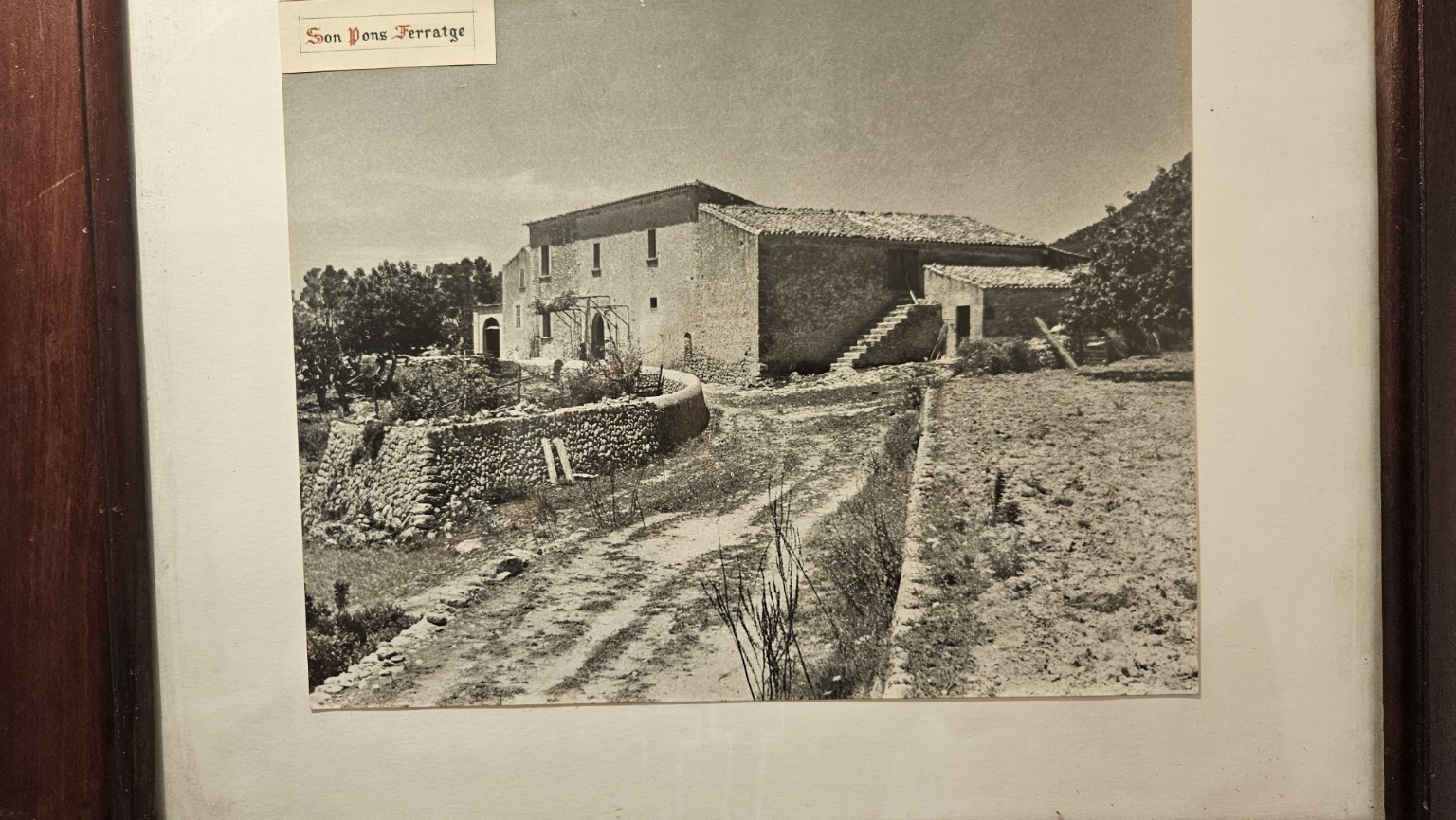 Episode IIThe Villalongas.Inheritance, entails and the material traces of the possessió.Read the chapterClose the chapter
The Villalongas and the paths of ownership
Inheritance and entails.
After Gabriel Ponç, the story becomes less linear. The documents preserve names and dates, but not every step that took Son Pons from one family to another.
In the world of Mallorcan nobility, inheritances, entails and lawsuits could keep an estate tied to a lineage for generations.
An inheritance across the centuries.
A bibliographic reference from 1868 mentions an entail over the Son Pons Ferratge estate established by Rafael de Villalonga in his 1589 will. The entail conditioned the succession of the assets: knowing the immediate heir was not enough to understand who might receive the estate later.
The documentation also points to a succession dispute in which different Villalonga branches appear. The litigants’ names speak of a complex family history; we still do not know the outcome of the lawsuit with certainty, nor can we turn all of them into owners of Son Pons.

The stones preserve another date.
On the portal of the former chapel there is a cross bearing the date 1672. It is an extraordinary material trace, but on its own it does not tell us who ordered the chapel to be built or when its religious use began.
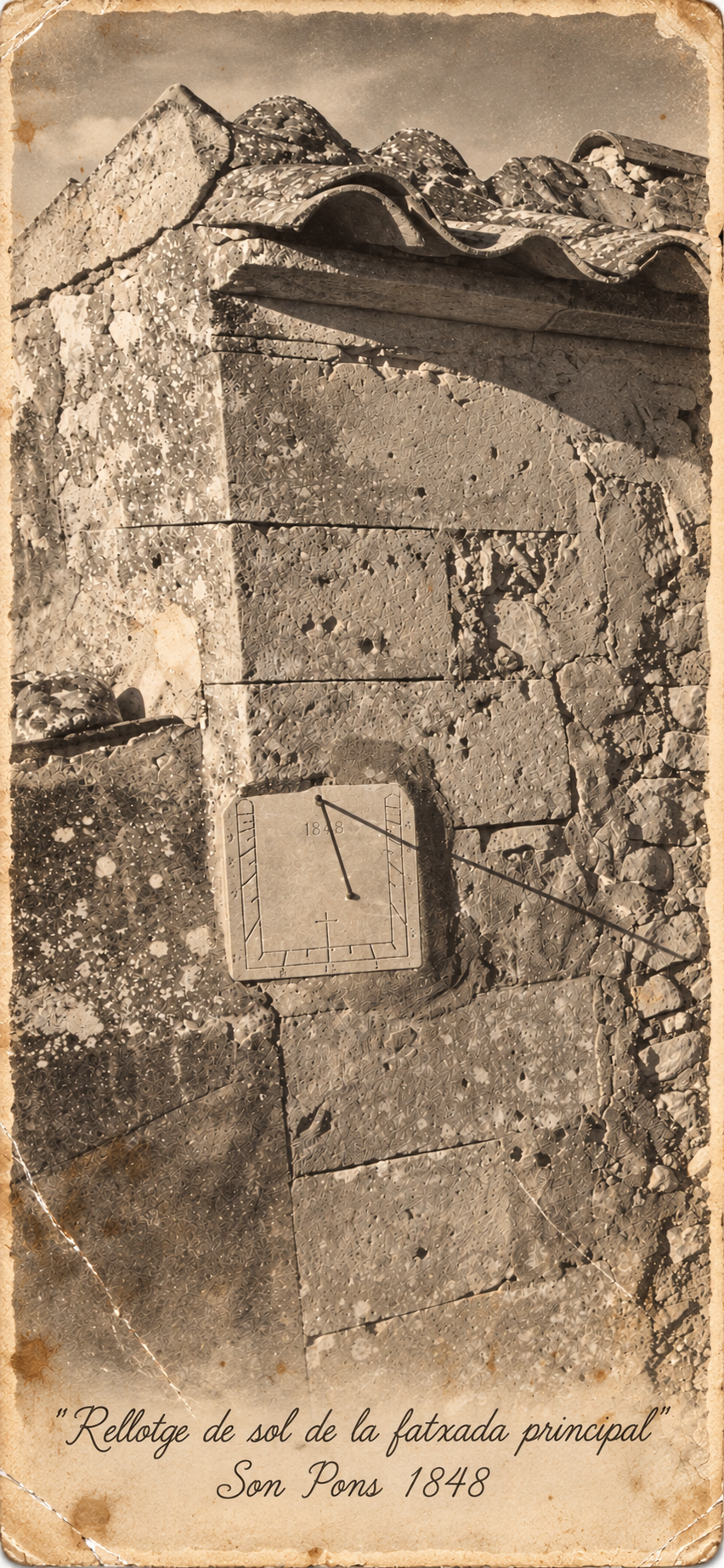
The sundial, dated 1848, adds another mark to this long history. While surnames succeeded one another in the papers, the houses accumulated their own signs of time.
Everyday life in the possessió
The house as a place of work and memory.
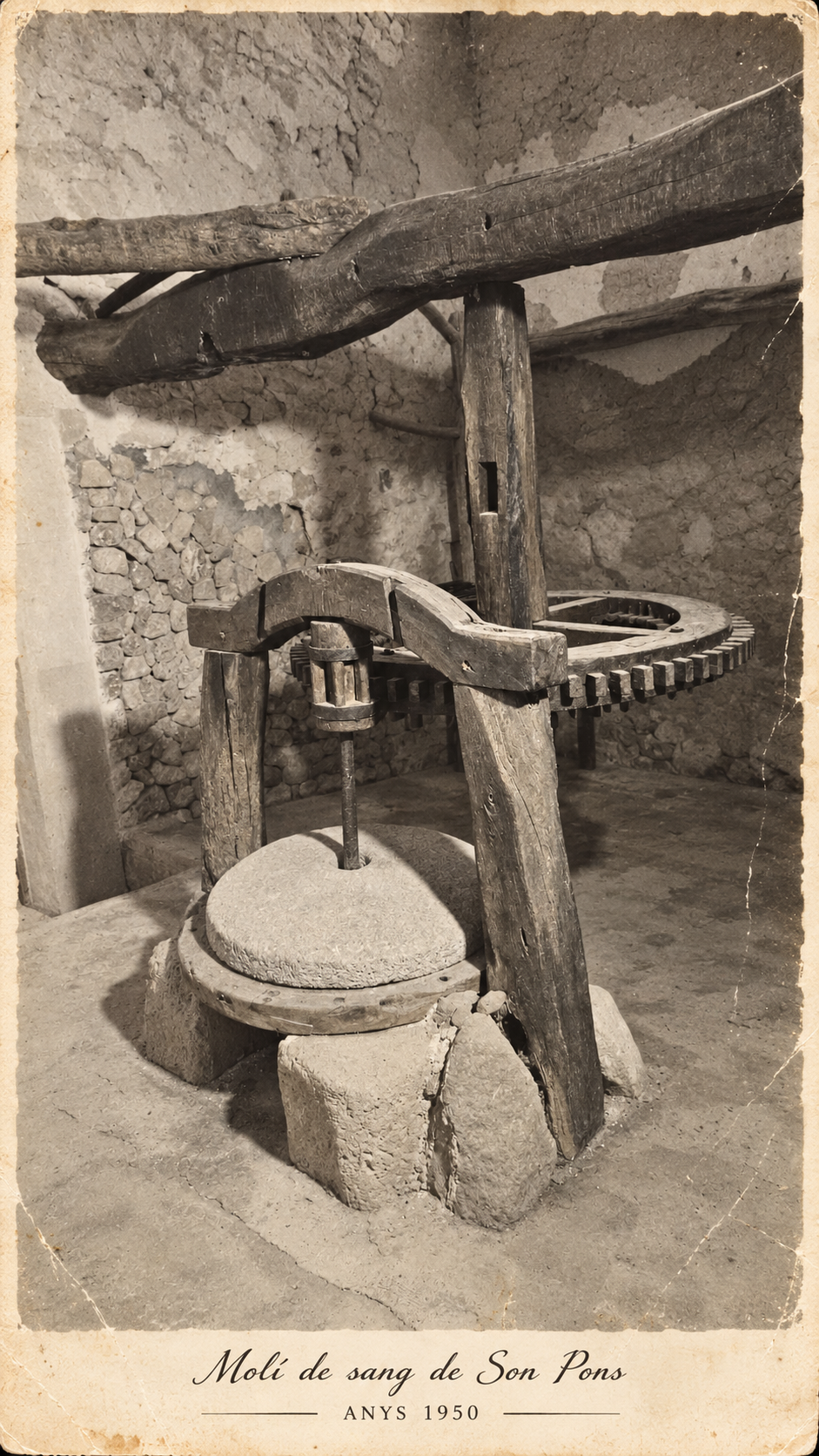
The mill recalls a self-sufficient possessió, shaped by animal labour, the transformation of the harvest and a domestic economy in which every room had a precise purpose.
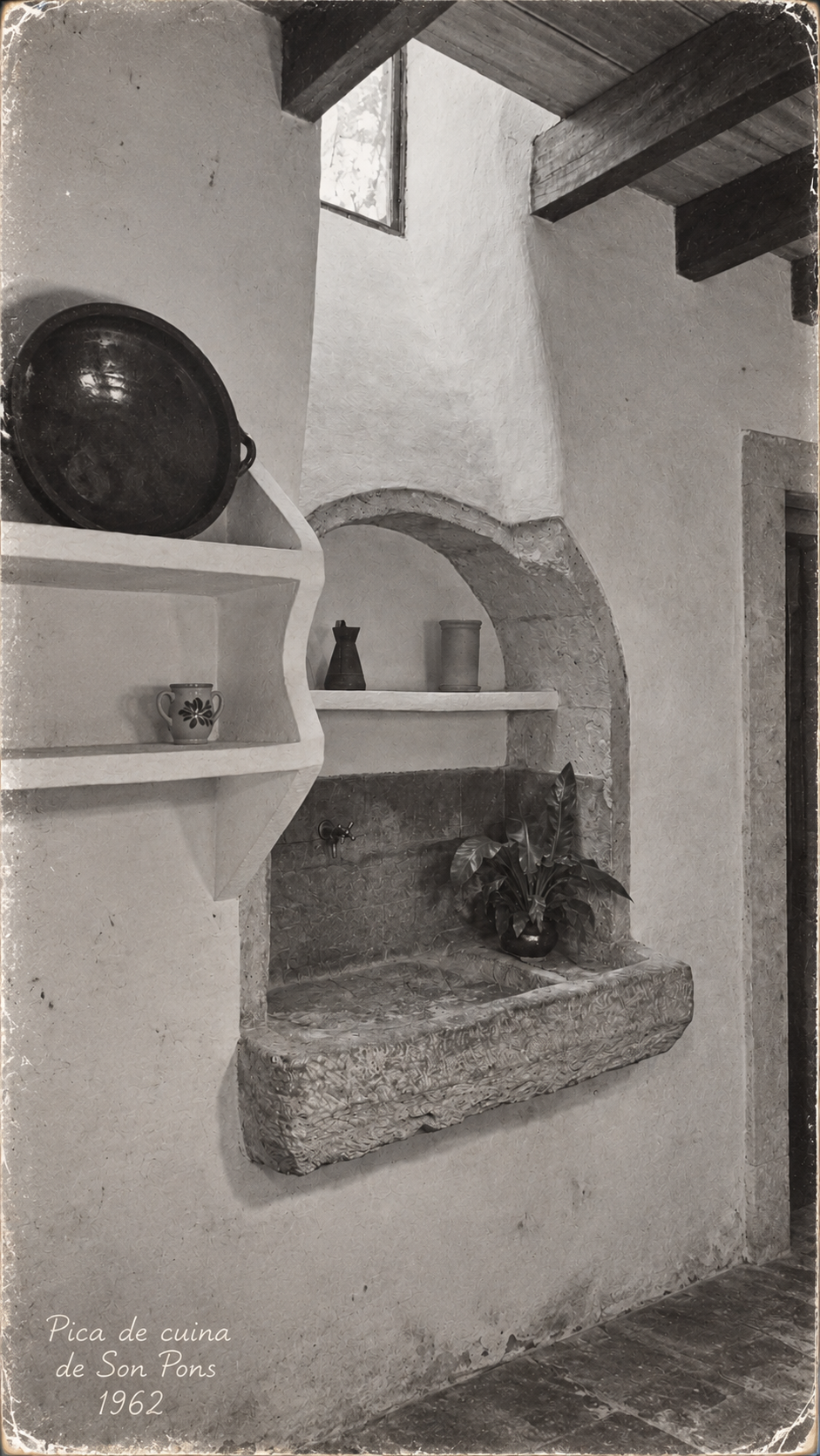
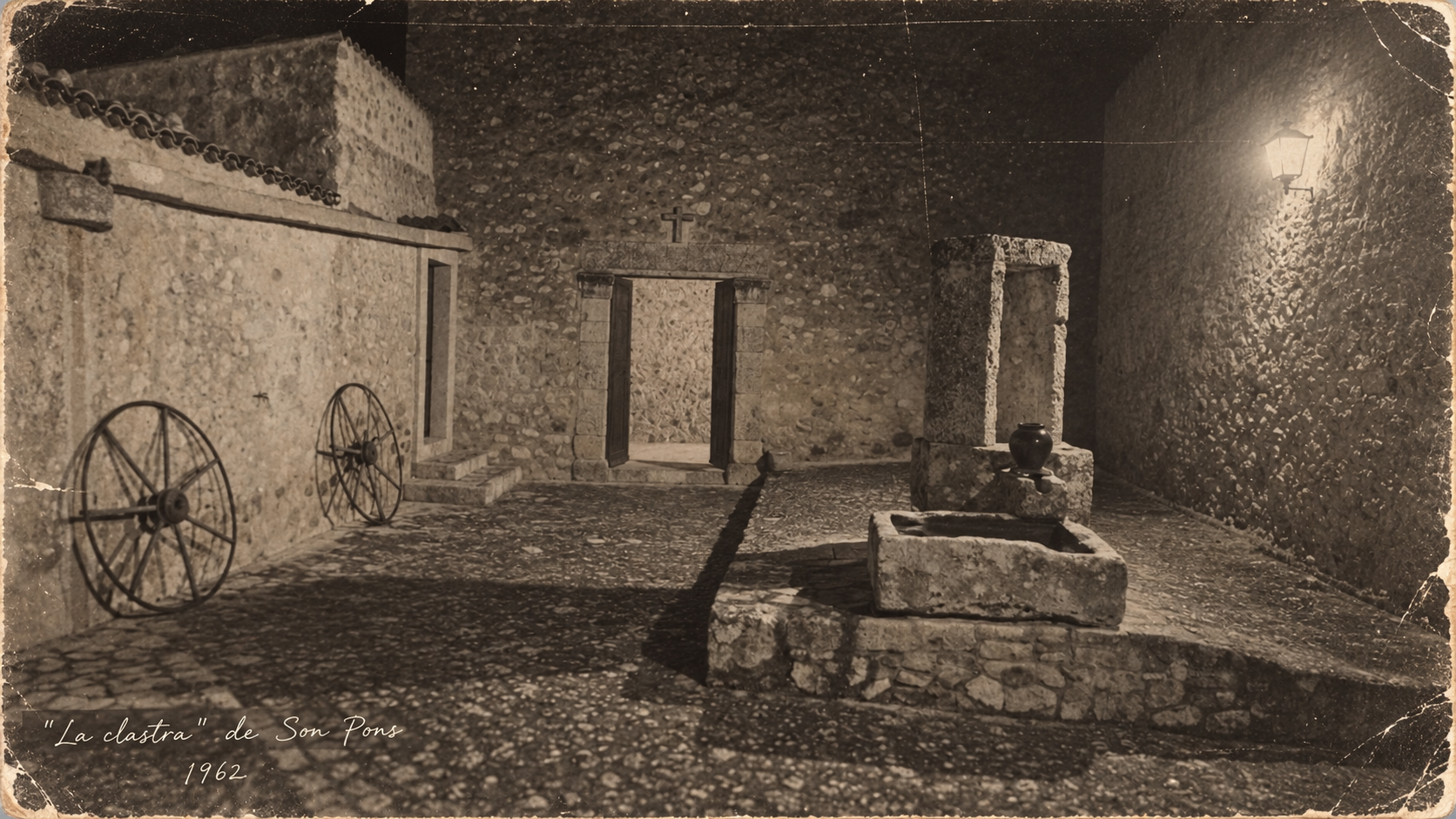
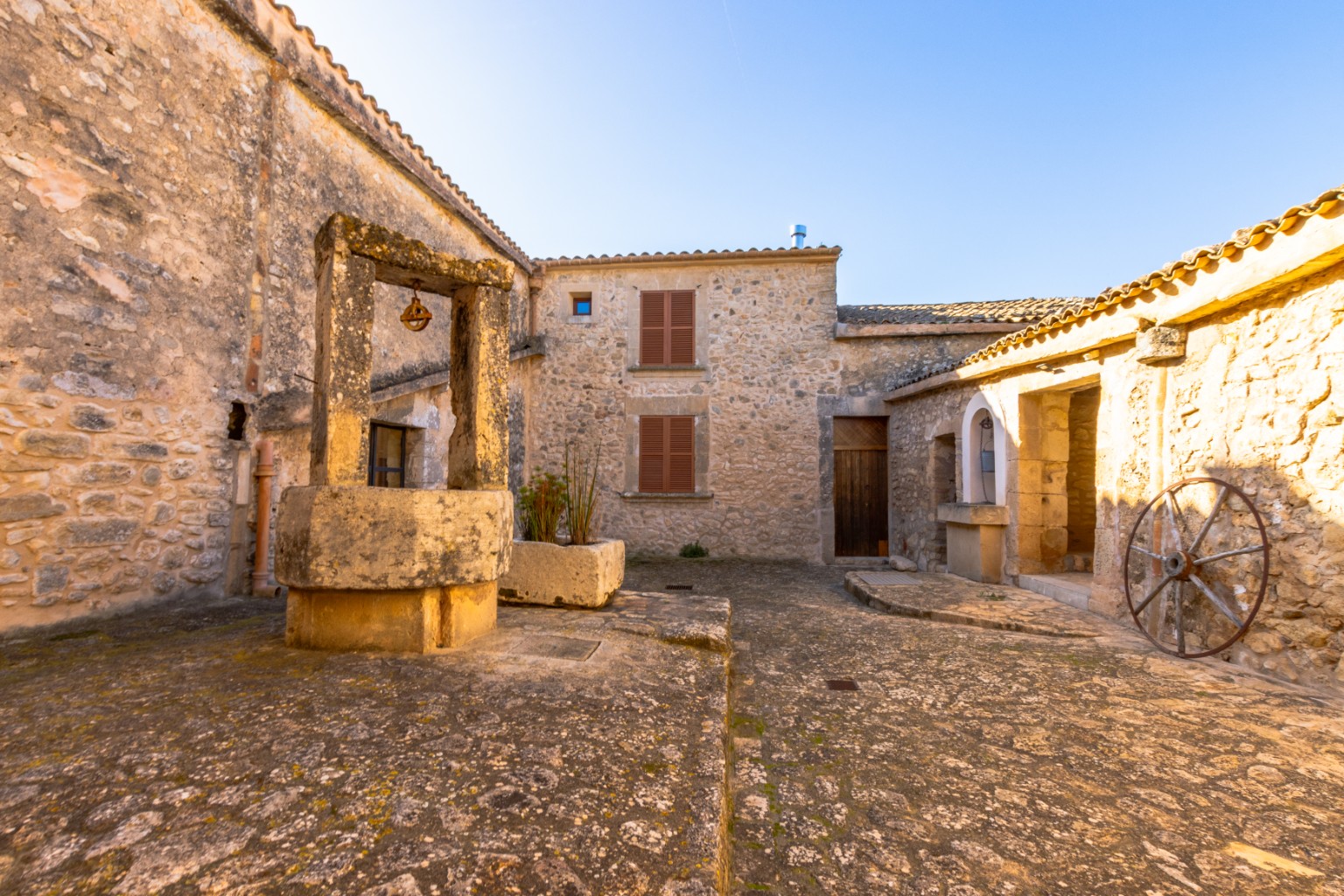
The basin and the clastra speak of daily life: water, cooking, animals, work and encounters around the courtyard that ordered the house.
 Episode IIISubdivision and family.The 1922 plan, the registry and family continuity.Read the chapterClose the chapter
From the Villalongas to the subdivision plan
The possessió is divided.
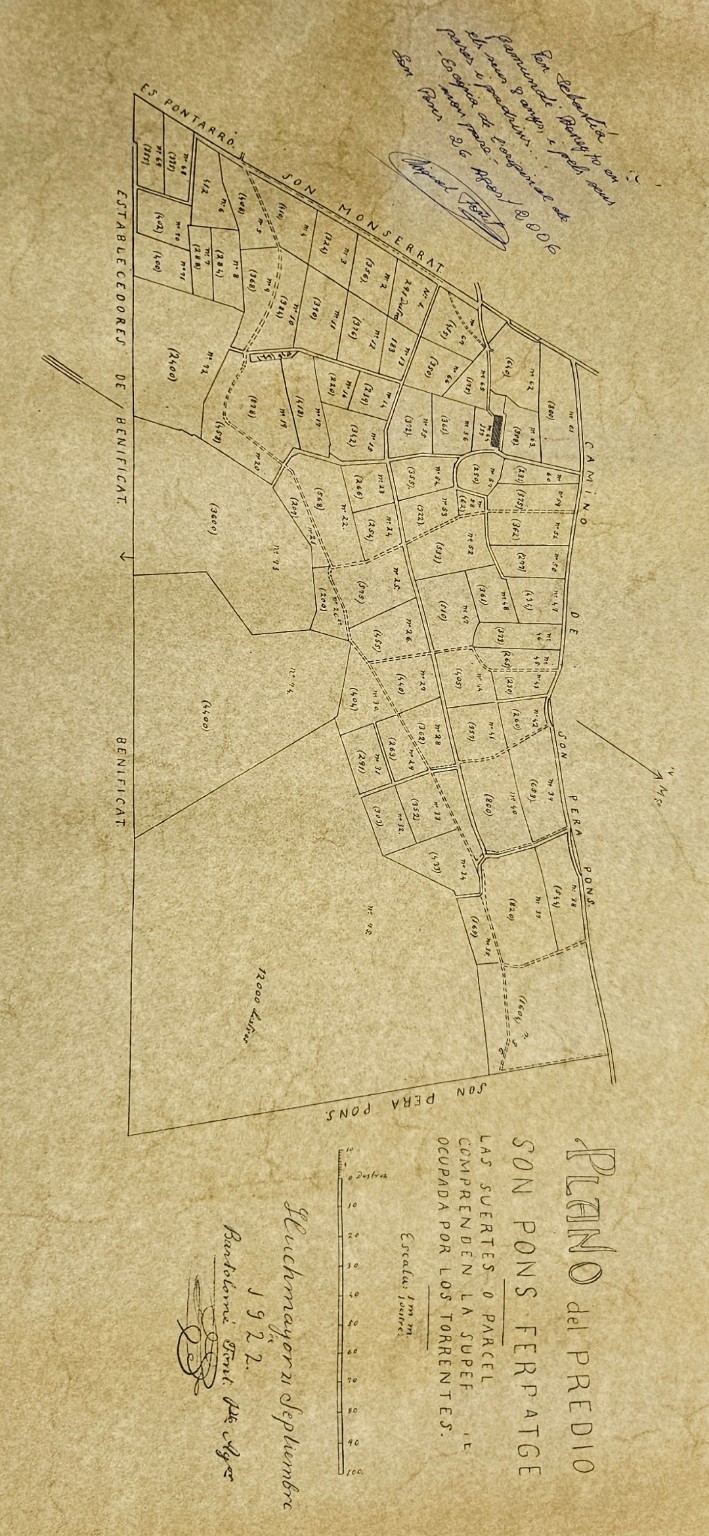
For centuries, Son Pons had been a possessió recognisable by its name, its houses and its lands. In the twentieth century, that territorial continuity began to change: the old estate was divided into lots, and the plan began to tell a different story from the one seen from the paths.
A territory drawn into parcels.
The documentation places a subdivision around 1922–1925. The numbered lots allow us to follow part of the land, but we still need to compare the complete plan, its areas and the deeds to reconstruct exactly what was sold and what remained attached to the houses.
Enlarge the original 1922 planThe registry states that Fomento Agrícola Industrial y Comercial de Lluchmayor had acquired the antecedent estate from Felipe Villalonga Dezcallar. The date and precise conditions of that purchase remain to be verified in the previous entry.
The house remains.
The numbers on the plan did not erase the life of the possessió. The clastra, the mill, the chapel and the paths continued to give unity to a place that no longer necessarily retained all its former boundaries.
Gabriel Garau Mut and family continuity
From working the land to owning it.
Some property histories begin with a sale. According to family memory, the story of Gabriel Garau Mut’s family at Son Pons had begun much earlier.
Gabriel, Sebastià Gamundí’s great-grandfather, worked the possessió. According to the memory passed down in the family, earlier generations had already been connected to those lands. They knew its paths, fields and houses long before the purchase took place.
1938. A decisive acquisition.
The registry documentation records that Gabriel Garau Mut acquired the usufruct of Son Pons and Margarita Garau Vidal the bare ownership. For the family, this meant more than a legal transaction: an old relationship with the possessió took on a new form.
The possessió remained in the family. Some spaces changed their uses, but the stone, the clastra, the chapel and the mill remained: witnesses to a house that never stopped changing.
 Episode IVThe memory of the possessió.Water, trees and stone as living memory.Read the chapterClose the chapter
Living memory
Water, trees and stone.
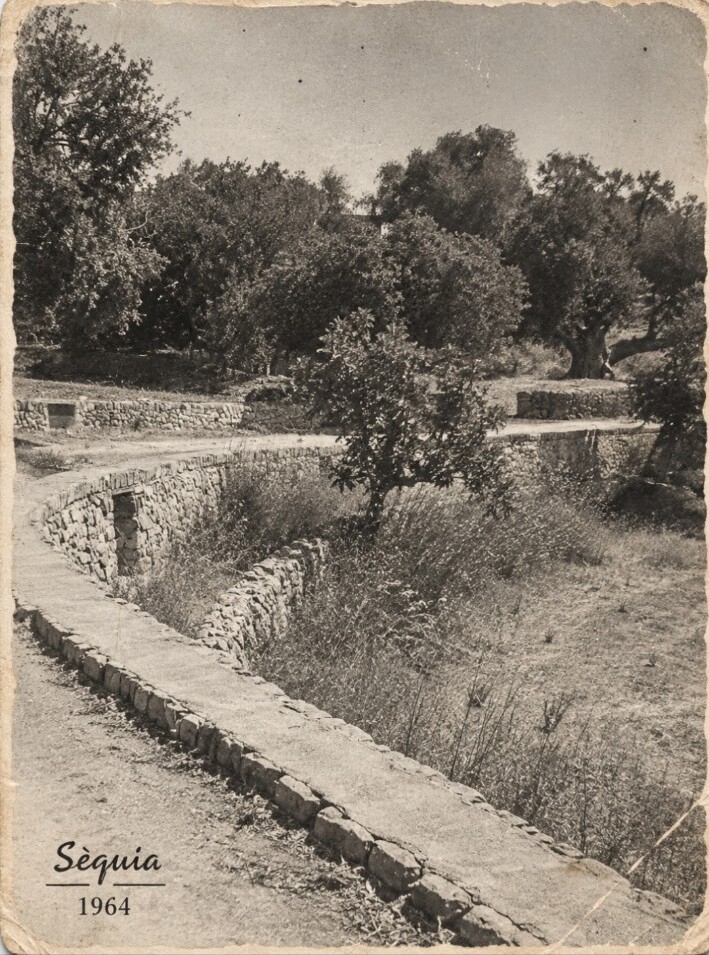
The séquia allows us to read the possessió through practical things: carrying water, organising the terraces, linking working areas and keeping the territory around the houses alive.
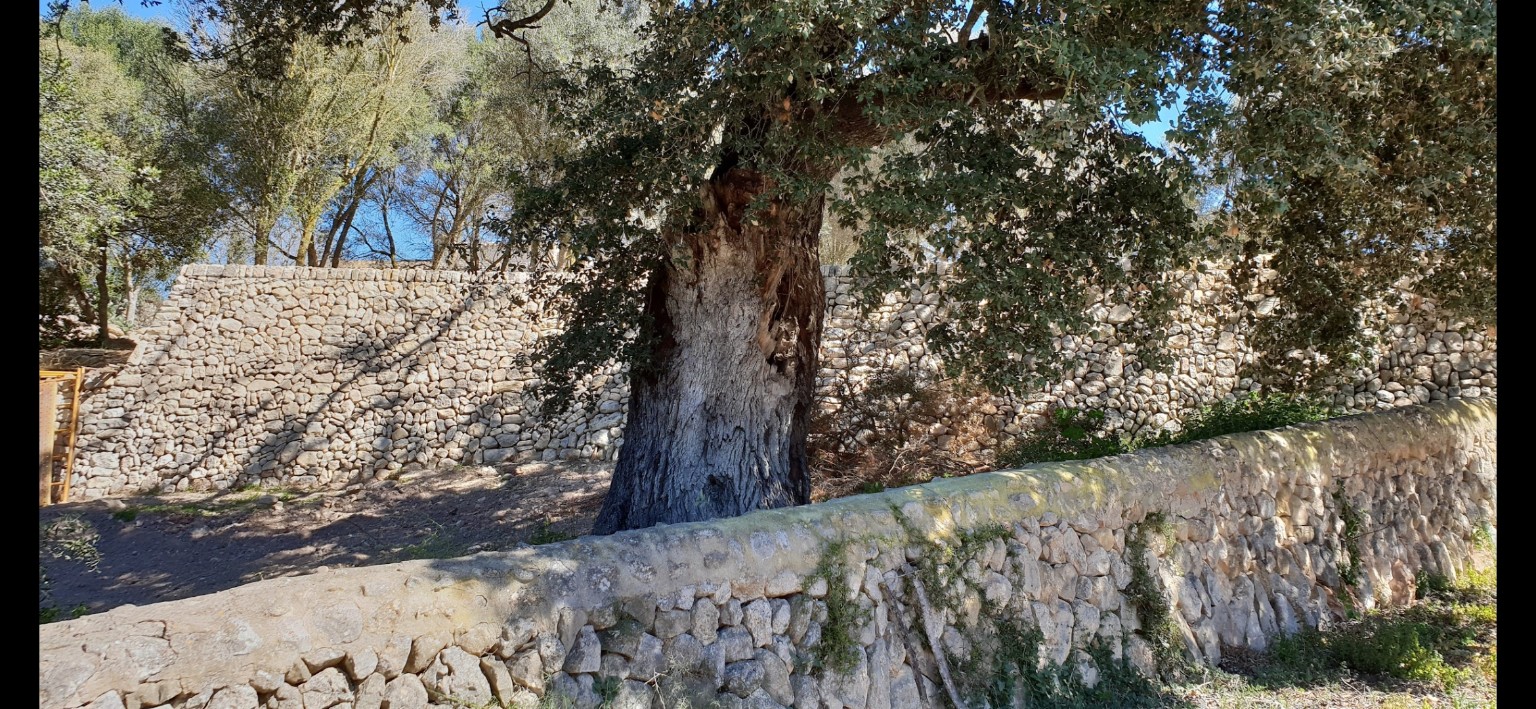
Roots that endure
At Son Pons, history is not read only in documents. It also lives in the stone, the earth and the trees that have watched generations pass.
“Some places preserve the memory of time in their stones.”
The terraces, dry-stone walls and centuries-old trees are part of Son Pons’s soul. They are silent witnesses to a history that remains alive.
Epilogue
The story continues.
Today, Son Pons preserves in its walls and landscape the memory of those who lived and worked here. Documents remain to be found and questions remain to be answered. There are also paths to walk and corners to discover.
Son Pons’s story does not end here. It continues.
Information and bookings